Home / Services / Professional Disaster Reconstruction Services
Some disasters leave damage that cleaning and repairs simply can’t fix. When a fire burns through your walls, a flood weakens your foundation, or a storm collapses part of your roof, disaster reconstruction is what gets your home or building back to a safe, livable condition.
Disaster reconstruction means rebuilding what was destroyed — not just cleaning what remains. It’s the phase of recovery that follows mitigation and restoration, and it often determines whether a home is truly safe to live in again or just looks like it is. At Christian Brothers, we’ve been providing disaster reconstruction services across San Diego County for over 20 years. Our IICRC-certified team manages the entire process from initial damage assessment through final finishing, giving you one accountable team for everything.
Disaster reconstruction is the process of replacing structural components and systems that were destroyed or compromised beyond repair during a fire, flood, mold event, or storm.
It’s helpful to understand how disaster reconstruction fits into the broader recovery process. Mitigation stops the damage from spreading. Restoration repairs what’s still intact. Disaster reconstruction replaces what’s gone.
In practice, most major events require all three phases — and the order matters. You can’t do disaster reconstruction in a contaminated space, and you can’t restore materials that no longer have structural integrity. Our blog on the reconstruction process after a disaster walks through the full journey from damage to finished home. And our post on whether it’s better to repair or reconstruct explains how we evaluate each situation before recommending a path forward.
Fire and Smoke Damage
Fire is one of the most common triggers for disaster reconstruction. Flames burn through framing, flooring, and roofing. Heat weakens structural components even in areas the fire didn’t directly touch. And the water used to extinguish the fire adds a second layer of damage that often requires its own reconstruction work.
Our San Diego fire damage restoration team handles cleanup and mitigation before disaster reconstruction begins — because rebuilding over smoke-contaminated materials traps hazardous residue inside your home permanently. Our post on why smoke and soot are more dangerous than the flames explains what’s at stake if that step gets rushed.
Water and Flood Damage
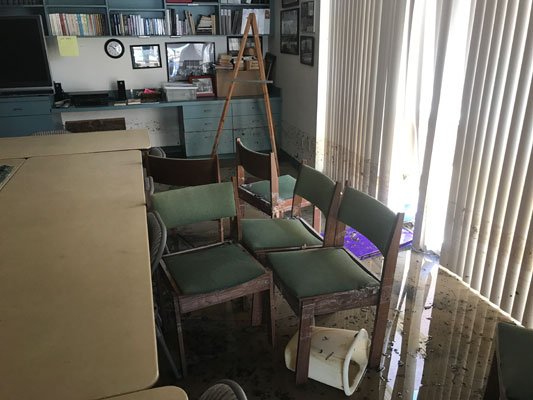
Water is slow and thorough in the damage it causes. When it sits inside walls, under floors, or in a flooded basement, it weakens wood framing, corrodes metal fasteners, destroys drywall, and creates conditions for mold growth. Disaster reconstruction after water damage means replacing those compromised materials and rebuilding the structure correctly.
Our San Diego water damage and flooding page covers the full scope of what water can do to a structure. The EPA notes that prolonged moisture exposure compromises building material integrity — which is exactly why disaster reconstruction is sometimes necessary even when the flooding event itself seemed manageable.
Mold Damage
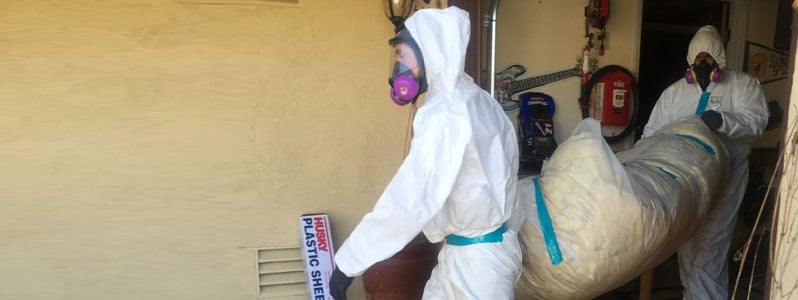
Severe mold contamination can reach the point where surface treatment isn’t enough. When mold has grown deep into structural framing, subfloor systems, or insulation, disaster reconstruction — full removal and replacement of those materials — is the only safe solution. Our post on health risks when mold restoration isn’t done right explains what happens when this work is skipped or done poorly.
Storm and Structural Damage
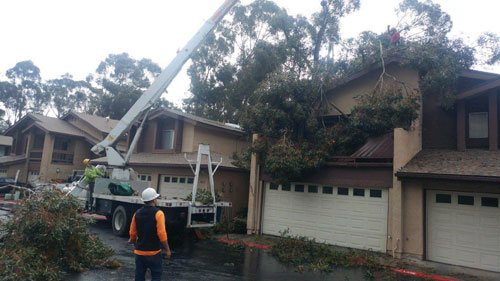
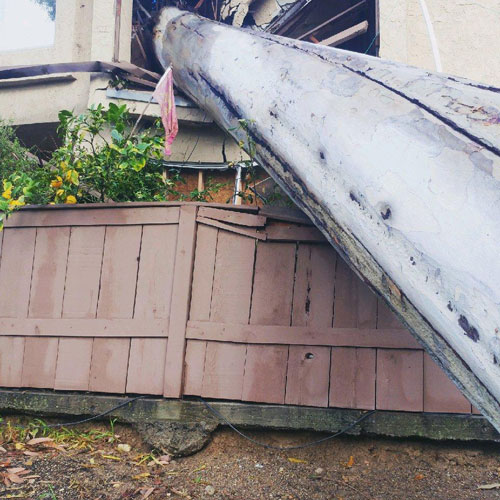
High winds, falling trees, and major storm events can cause immediate, visible structural failures. Collapsed roofing, broken load-bearing walls, and compromised foundations all require disaster reconstruction — not just repairs. When structural safety is in question, the work has to be done correctly and completely. Our blog on structural damage reconstruction and safety covers the standards that guide this work.
Wildfire Damage
San Diego’s wildfire history makes this a specific category worth addressing on its own. Wildfire events often affect entire neighborhoods — and the damage goes beyond what’s visibly burned. Ember penetration into attic spaces, smoke saturation throughout wall cavities, and heat damage to structural components can all require disaster reconstruction even in homes that appear largely intact from the outside. Our wildfire cleanup page covers the mitigation side of these events in detail.
Disaster reconstruction is a coordinated sequence of steps. Each phase has to be completed correctly before the next one begins. Here’s how we approach it.
Every disaster reconstruction project starts with a thorough inspection of what the event actually did to your property. We evaluate structural framing, load-bearing systems, floor assemblies, roofing, and mechanical systems. We look beyond visible damage to identify compromised components that aren’t obvious on the surface. This assessment drives the disaster reconstruction plan and provides the documentation your insurance company needs to process the claim.

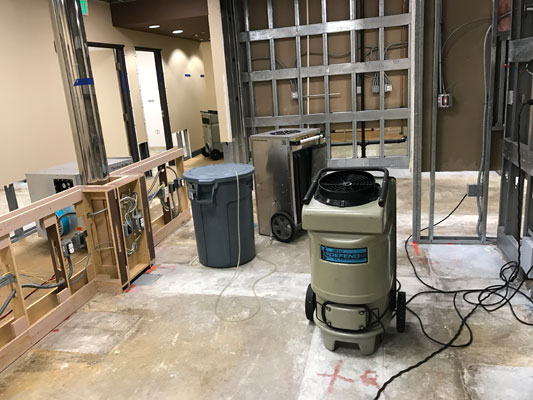
Disaster reconstruction can’t begin in a contaminated environment. Before rebuilding starts, we address the source — removing soot and smoke residue, drying out water-damaged materials, containing and remediating mold, or clearing storm debris and hazardous materials. Building new walls over unresolved contamination means trapping that contamination inside your home permanently.
This is one of the strongest reasons to have a single company handle both mitigation and disaster reconstruction. Our post on why you need a single reconstruction team for mitigation and rebuild makes this case clearly.

Your belongings can’t stay in the home during disaster reconstruction. Dust, debris, and construction activity cause secondary damage to items left in place. We coordinate pack out services to remove your contents, clean and store them safely during the rebuild, and return everything once disaster reconstruction is complete.
This is the core of disaster reconstruction. We replace burned, rotted, or structurally compromised framing. We rebuild wall systems, ceilings, and floor assemblies. We address roofing damage and restore structural integrity throughout the affected areas. Materials are matched to or exceed original specifications, and where possible we recommend improvements that increase the property’s resilience against future events.
The International Code Council maintains the building standards that guide responsible disaster reconstruction practices. Our team builds to those standards on every project.
Disasters rarely damage just the structure. Electrical wiring, plumbing, HVAC, and insulation are often affected in the same event. Disaster reconstruction includes inspecting and restoring all of these systems. Damaged wiring left in place during rebuilding is a genuine fire hazard. Everything gets evaluated and replaced as needed — not just the visible structural work.
Disaster reconstruction after a covered event is typically included in a standard homeowners or commercial property policy. But managing a major claim while also overseeing a full rebuild is genuinely overwhelming.
Our team handles the documentation your carrier needs — structural damage assessments, scope of work, material specs, photo evidence, and cost breakdowns — in the format insurers require. We’ve worked with every major insurance company operating in San Diego and know how to keep disaster reconstruction claims moving without unnecessary delays.
The California Department of Insurance provides homeowner guidance on disaster claims that’s helpful for understanding your rights throughout the disaster reconstruction process.
If there’s a gap between what your policy covers and the actual cost of disaster reconstruction, our financing options page and our post on managing restoration costs when insurance falls short both offer practical options. Our FAQ page also addresses common insurance questions that come up during disaster reconstruction projects.
San Diego’s geography, climate, and wildfire history create specific disaster reconstruction challenges that our team has dealt with directly for over two decades.
Inland communities like Escondido and Poway sit in high-risk wildfire corridors. Disaster reconstruction in these areas frequently involves attic-level smoke damage, ember penetration into roof assemblies, and heat damage to structural components that don’t look compromised from the outside. Coastal areas like Oceanside and Encinitas add marine layer humidity into the equation — moisture management during disaster reconstruction is critical in these communities to prevent mold developing inside newly reconstructed wall cavities.
East County communities including El Cajon, Santee, and La Mesa receive full disaster reconstruction services with 24/7 availability. South Bay areas including Chula Vista and National City are fully covered. Properties in La Jolla and Rancho Bernardo receive disaster reconstruction matched to higher-end materials, custom finishes, and elevated structural standards.
See our full service areas page for complete coverage details across San Diego County.
Coordinating multiple contractors during a major rebuild adds stress to an already difficult situation. At Christian Brothers, we manage the complete disaster reconstruction process under one roof — mitigation, contents protection, structural rebuilding, systems restoration, and interior finishing.
One team. One point of contact. No gaps between phases where things fall through the cracks. Our projects page shows real examples of disaster reconstruction work we’ve completed for homeowners and businesses throughout San Diego County.
We’re available 24/7 for emergency response and disaster reconstruction planning. The sooner we assess your property, the sooner we can get a clear plan in place and work started.
Contact Christian Brothers today to schedule your disaster reconstruction assessment. We’ll document the damage, coordinate with your insurance company, and rebuild your property the right way — from the structure up.
Contact Christian Brothers at (619) 901-1922 for immediate flood damage cleanup services throughout San Diego County.

We offer a full suite of restoration services across San Diego County—all performed by our in-house team of licensed, bonded, and IICRC-certified professionals.
Water damage removal, water extraction, flood damage removal, and structural dry out services.
Facility inspection and detection using state of the art technology and thorough remediation.
We employ contents specialists to protect, restore and store your possessions.
The expertise to reconstruct your home or business better than its original state.
Our fire restoration repair team provides the highest quality fire damage restoration